
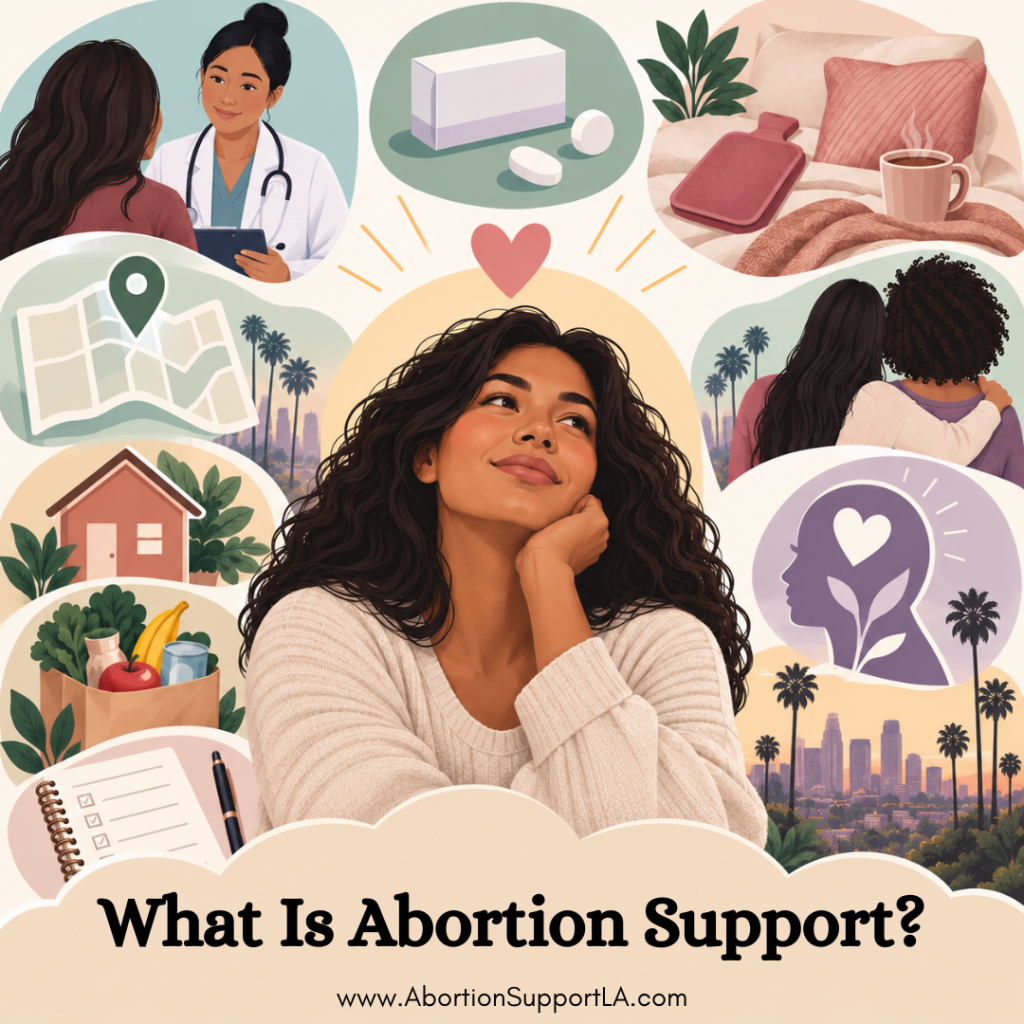
Abortion can come with a lot of questions.
Where do I go? What happens at the appointment? What is the abortion pill? What should I expect afterward? How much bleeding is normal? What should I have at home? What if I need a ride? What if I don’t have anyone to talk to? What if I need help finding food, housing, mental-health support, or simply someone who understands what I’m going through?
Abortion Support exists to help women find answers to those questions.
Our blog and social media pages are designed to provide practical, understandable information for women before, during, and after an abortion.
We aren’t here to tell you how you’re supposed to feel or what your abortion experience is supposed to look like. We’re here to help you become more informed, more prepared, and better connected to the resources you may need.
Understanding Your Options
One of our biggest goals is simply making abortion information easier to understand.
Medical information can sometimes feel overwhelming—especially when you’re already trying to make appointments, manage work, arrange transportation, take care of children, think about finances, or process your own emotions.
Through our educational articles and social media posts, we break complicated subjects into smaller, understandable pieces.
You may see posts explaining:
- Medication abortion, commonly called the abortion pill
- Mifepristone and misoprostol
- In-clinic abortion procedures
- What may happen during an appointment
- Questions to ask your healthcare provider
- Preparing for an abortion
- What recovery may look like
- Common physical experiences afterward
- Follow-up care
- When to contact your healthcare provider
Medication abortion and procedural abortion are different experiences, and factors such as health and gestational age can affect the options available to an individual.
Our educational content isn’t a replacement for medical care. Instead, we want it to help you understand the terminology, know what questions to ask, and feel better prepared when speaking with your healthcare provider.
Preparing Before an Abortion
Sometimes knowing what to expect can make an unfamiliar medical experience easier to navigate.
That’s why a major part of Abortion Support focuses on preparation.
We create practical content about preparing your home, planning transportation, arranging childcare, preparing for time away from work, asking your clinic questions, and gathering things you may want during recovery.
You may find a post as simple as:
“What should I have at home before taking the abortion pill?”
Or:
“10 questions to ask your abortion provider before your appointment.”
These are the everyday questions that matter when you’re actually going through the experience.
Understanding the Abortion Pill
Medication abortion deserves its own educational space because there can be a significant difference between knowing that “there is an abortion pill” and understanding what medication abortion actually involves.
Our Abortion Pill educational series explains topics such as mifepristone and misoprostol, cramping, bleeding, common side effects, preparing your recovery space, follow-up care, and recognizing when you should contact a healthcare professional.
For example, bleeding and cramping are expected parts of medication abortion, while healthcare providers should also explain warning signs that require medical attention.
We want women to have access to clear information before they are sitting at home wondering, Is this supposed to be happening?
Aftercare Matters Too
Abortion support doesn’t necessarily end when an appointment is over or the medications have been taken.
There is an after.
Our content also focuses on what the hours, days, and weeks following an abortion may look like.
We’ll discuss physical recovery, rest, bleeding and cramping, returning to work and normal activities, follow-up instructions, contraception when relevant, emotional well-being, and knowing when something warrants contacting a healthcare professional.
Every woman’s medical situation is different, so her own provider’s instructions should always take priority.
Emotional and Mental-Health Support
There isn’t one emotion that every woman is required to experience after an abortion.
Someone may experience relief. Someone else may experience sadness. Another woman may experience several emotions simultaneously. Some may not experience a strong emotional response at all.
Our emotional-support content creates room to talk about those experiences without deciding for women what their abortion is supposed to mean.
We’ll discuss topics such as processing your decision, setting boundaries around who you tell, dealing with an unsupportive partner or family member, finding someone safe to talk to, recognizing when additional mental-health support may be helpful, and locating professional resources.
Practical Support Is Abortion Support
Sometimes the biggest problem isn’t understanding the medical procedure.
It’s everything surrounding it.
How am I getting there?
Who’s watching my children?
Can I afford to miss work?
Where am I sleeping tonight?
Do I have food at home while I’m recovering?
Who can I call if I don’t have support?
That is why our resource content extends beyond abortion education.
We want to connect women with information about Los Angeles abortion providers, emergency and temporary housing resources, food assistance, mental-health resources, transportation information, community programs, financial-support resources when available, and other services that may make navigating an abortion easier.
California also maintains abortion resources covering areas including finding care, paying for services, financial assistance, rights, and emotional and wellness support.
Abortion Doula Support
Some women want another person in their corner.
Abortion doulas can provide nonjudgmental emotional and practical support surrounding an abortion. Depending on the situation and services offered, support may include helping someone prepare, identifying questions to ask a provider, organizing practical needs, providing emotional support, helping develop an aftercare plan, and connecting someone with additional community resources.
Our website helps women learn more about abortion doula support and how to connect with support when available.
Information Without Judgment
Above everything else, Abortion Support is an information and resource space.
We’re creating the articles we would want someone to find when she picks up her phone at 2:00 in the morning and types:
What happens when you take the abortion pill?
What should I bring to an abortion appointment?
How do I prepare?
What should I expect afterward?
Where can I get an abortion in Los Angeles?
Can somebody help me through this?
Those questions deserve useful answers.
Our blog allows us to explore these subjects in depth. Our social media allows us to turn that information into shorter explanations, checklists, graphics, reminders, and resources that women can quickly read, save, and share.
Together, they’re designed to create an accessible library covering the experience from information and preparation to recovery, resources, and emotional support.
Because sometimes support begins with something very simple:
Knowing what to expect, knowing where to look, and knowing who you can ask for help.
Abortion Support provides educational and resource information and does not replace individualized medical advice, diagnosis, or treatment. Medical questions and concerns should be discussed with a qualified healthcare professional.